
News
Historic Changes to Housing Enforcement Announced at RHE Conference - Interview with Luke Spanton MHCLG
Historic Changes to Housing Enforcement Announced at RHE Conference - Interview with Luke Spanton MHCLG
by William Hatchett
News
by William Hatchett
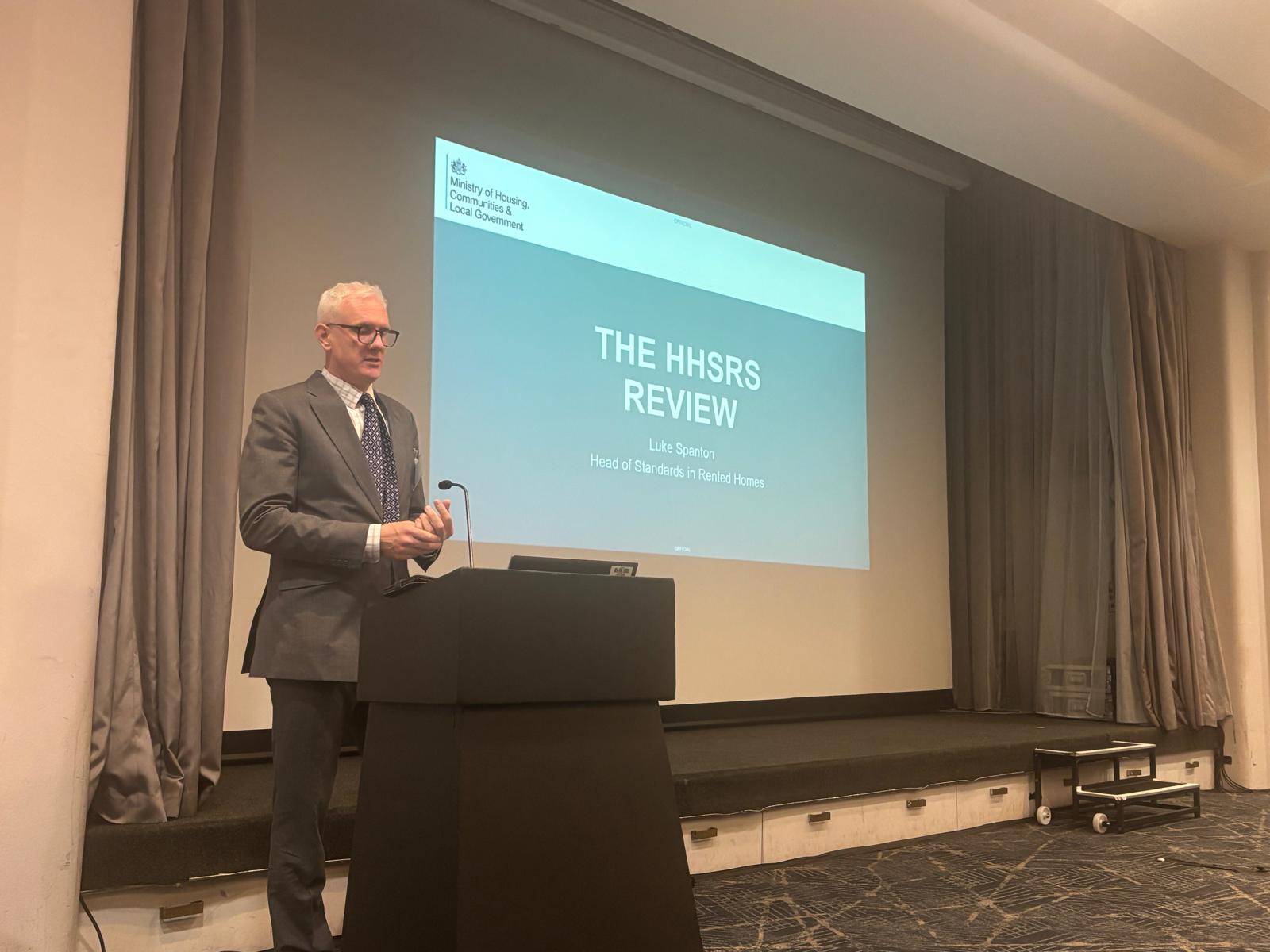
Operating guidance for the revised Housing Health and Safety Rating System (HHSRS) has been laid before Parliament, Luke Spanton, head of cross-tenure standards at MHCLG, told the RHE Housing 2026.
Spanton said: “I would expect that some peers from the House of Lords will show an interest in the scrutiny process.” The formal process, initiated on the week of the RHE conference, fired the starting gun for historic changes to renters’ rights and landlords’ responsibilities and to wide-ranging reforms across both sectors of rented housing.
The reforms, which are the most radical since the Housing Act of 1988, are designed to move towards bringing private rented and social housing under more common standards and regulation in England by 2035.
After scrutiny is complete, within 40 days, HHSRS baseline indicators can enter into law, defining Category 1 hazards that require mandatory action by local authorities. The 40 days will end on 1 May, coinciding with the commencement of new landlord obligations and penalties under the Renters’ Rights Act 2025.
From that date, councils will be able to issue penalties of up to £7,000 to landlords for Type 1 breaches of the RRA, including the presence of Category 1 hazards, without waiting for a landlord to first fail to comply with an improvement notice.
Spanton said the context of the legislation was the government’s Decade of Renewal for Social and Affordable Housing plan, launched last July following the Spending Review 2025 and updated in January 2026. As well as pledging to deliver roughly 300,000 new homes, with at least 60% for social rent by 2036, the plan contains provisions to converge the regulatory regimes for all rented housing.
Awaab’s law on damp and mould already applies to social housing and is expected to be extended to the private rented sector under the RRA later this year. The improvement in minimum energy efficiency standards for the PRS from E to C will apply to that sector in 2030.
From 2035, a new Decent Homes Standard will apply to both the social and private rented sectors, to be enforced by the Regulator of Social Housing and local authorities.
Spanton noted: “We need an effective and stable regulatory regime. Landlords need to know what’s required of them and when. Social landlords, in particular, need to start work now. I’d like to suggest the same is true of private landlords.”